Grant for research into the honour of ‘Righteous Gentiles’
Dr Sarah Cramsey (Humanities) has received a LUF grant for her research project ‘Re-thinking the Holocaust Rescuers: An Interdisciplinary Comparison of Dutch and Polish “Righteous Gentiles”.’ She will use the grant to research those awarded the title of ‘Righteous Gentiles’ by Yad Vashem, the World Holocaust Remembrance Centre. There Righteous Gentiles are more than 28,000 people from 51 countries who helped Jews during the Holocaust and the Second World War.
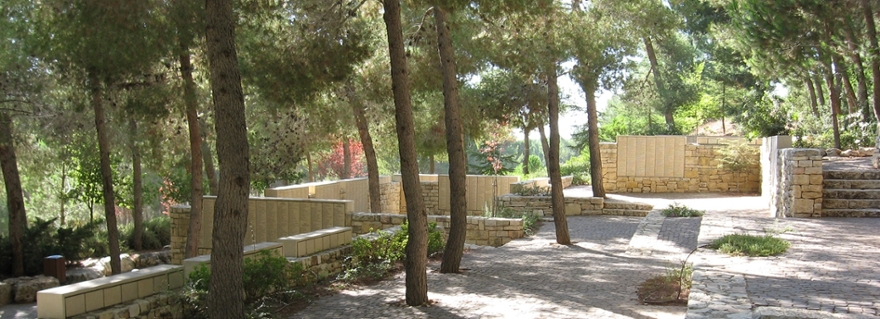
High above the Old City of Jerusalem winds a sun-drenched garden path called the Avenue of the Righteous. Here you will find trees, memorial plaques and a wall bearing the names of the 28,000 ‘Righteous Gentiles’. This honorary title is bestowed by the ‘Commission for the Designation of the Righteous’. Over the past six decades, the commission has reviewed nominations, looked at what motivated these potential ‘rescuers’ and finally decided which nominees deserve the title. Almost half of all recipients of the ‘Righteous’ title come from just two countries: Poland and the Netherlands.
Honour
Yad Vashem grants the title of Righteous Among the Nations to non-Jews who stood against the persecution of Jews during the Second World War, at great risk to themselves.
Why do ordinary people become ‘rescuers’?
Within the Commission’s archives, Cramsey has found discussions that reflect a struggle around two questions. What turned ordinary people into the extraordinary helpers and rescuers of thousands of Jews in the 1930s and 1940s? And how do you objectively recognise and remember this category of people? Cramsey has set out to find the answer, through three objectives. ‘First, I will research the geography, personal characteristics and motivations of 5,910 Dutch and 7,177 Polish citizens of a non-Jewish background who rescued Jews. Second, I will investigate the process by which these Dutch and Polish people received this title. And third, I want to show how the existence of this category of ‘Righteous Gentiles’ shapes the way societies, in Poland, the Netherlands and across Europe, continue to remember how the genocide happened.’
‘How did ordinary people turn into the helpers and rescuers of thousands of Jews in the 1930s and 1940s?’
And how does honouring these ‘Righteous Gentiles’ influence Polish and Dutch perceptions of what they did and did not do during the Holocaust? Cramsey’s research will use software to sort the records of some 13,000 Dutch and Polish ‘rescuers’ from Yad Vashem’s files. She will also look at the Commission’s notes, ‘Righteous Gentile’ nominations that were refused and correspondence about the nomination process at the government, ministerial and institutional levels. Popular culture is very important too. Books, poetry, digital and print media, films, music, the internet and museums all show how a population dealt and still deals with Holocaust remembrance.
Nuanced research into Gentiles in the 1940s
‘There have recently been various controversial debates about the limits of collective “righteous” behaviour during the Holocaust. These have been accompanied by attacks on Polish historians and a publication about who did or did not betray the secret hiding place of Anne Frank and her family,’ says Cramsey. For her research, she will travel to, among others, The Hague, Amsterdam, Poland, Israel, Boston and Chicago. It is time for nuanced research into the motivations and actions of Dutch and Polish Gentiles in the 1940s.
Header photo: Garden of the Righteous Among the Nations (Yad Vashem. The World Holocaust Remembrance Center)