A heart plaster to limit damage after a heart attack
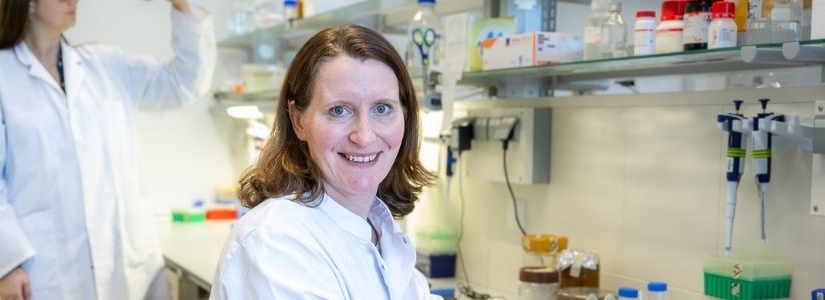
How do you protect the heart after a heart attack and support its recovery? This is what Anke Smits, a cardiovascular cell biologist at the LUMC, is working on. With support from the Leiden University Fund, she is developing an innovative ‘heart plaster’: a biomaterial that is applied to a damaged heart to limit scarring, stimulate natural repair and temporarily support the vulnerable tissue.
Thanks to the commitment of the LUF’s donors, this promising innovation is one step closer to reality.
Although the plaster is not yet ready to be used on heart patients, the initial results are encouraging: the prototype plaster adheres well to the heart, and the next step is to identify which active compounds best support recovery.
From stem cell to plaster
The idea for the heart plaster originated during Smits’ PhD research. She investigated how locally injected stem cells might help the heart recover from injury. She initially expected these cells to develop into new cardiac muscle tissue, but found this was not the case.
‘The heart showed partial recovery because the injected cells secreted a range of factors that had beneficial effects on the surrounding area, rather than forming new muscle tissue’, says Smits. That led to a new line of thinking: if the heart retains some natural capacity for repair, could the process be enhanced by delivering the right substances locally?
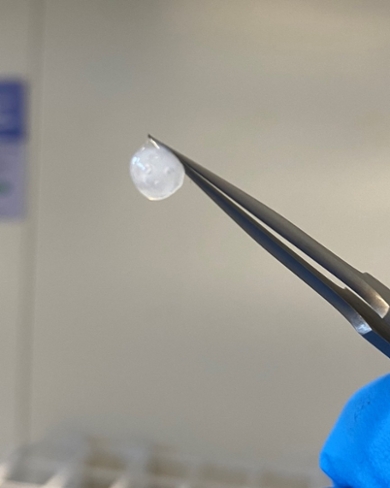
That raised a further challenge: how to ensure that these substances end up in the right place. Working with Eindhoven University of Technology, Smits developed a gel-like patch that adheres to the heart in a moist environment. The approach was inspired by mussels, which use comparable chemical processes to attach to surfaces underwater.
‘Even a modest improvement in recovery can have a real impact on patients’ quality of life’
Three functions in one
Following a heart attack, part of the heart muscle dies. Unlike other cell types in the body, cardiac muscle cells have limited regenerative capacity. Scar tissue forms in their place.
While this may seem disadvantageous, it is essential: without scar formation, the heart wall becomes fragile and can tear. That makes the research particularly complex. ‘If you intervene in the repair process, you also have to ensure sufficient support to prevent the wall from tearing’, says Smits.
The heart plaster therefore needs to perform three functions in one: release substances that limit scar formation, promote repair and provide mechanical support to the damaged heart wall.
Finding the right active compounds
An important milestone has already been achieved: the plaster adheres effectively to the heart. Smits and her team are now optimising properties such as strength and chemical composition, to ensure the patch provides appropriate support.
They are also investigating which molecules cause scar formation and which compounds might inhibit this process. Not all candidates are suitable: the size and electrical charge of a molecule determine whether it can diffuse from the plaster into the cardiac tissue.
Small plaster, big impact
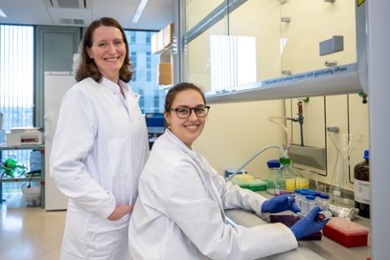
The heart plaster is not ready for clinical use, but Smits sees considerable potential. If this approach proves successful, it would significantly benefit patients at risk of heart failure following a heart attack.
‘Even a modest improvement in recovery can have a real impact on patients’ quality of life’, says Smits. ‘Our aim is to support this recovery.’
Smits is grateful to the donors of the Leiden University Fund: ‘Thanks to their support, my team can continue to build on this promising innovation. We are taking new steps towards a treatment that could make a real difference in the future.’
Would you like to help make this kind of research possible? You can support the Leiden University Fund with a one-off donation or a recurring contribution. You can also join the LUF Key Family.