
Four generous gifts
A brand-new machine, a historic document or an essential tool. Thanks to donations to the LUF, researchers and students can acquire objects that would otherwise be beyond their reach. Here are just a few examples of such academic acquisitions.
Single ventricle heart
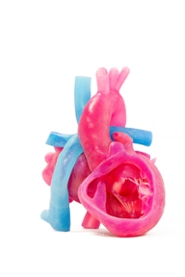
For more than eight years, the LUMC Department of Cardiology has had a collection of 3D-printed models of hearts with congenital defects. These are used in research and teaching to demonstrate heart anomalies and how they can be treated. They are also used in consultations with patients and their families and friends. Drawings are often used to give such explanations, but these models make the conditions much more tangible.
Cardiologist Monique Jongbloed sometimes gives patients a smaller model to take home. ‘They also attract a great deal of interest when we bring them to patient events. They show congenital heart defects, such as a missing ventricle. Most people with these conditions appreciate gaining a better understanding of them, and so do their families and friends.’
2018, plastic, approx. 15 x 10 cm, LUMC, on display in a cabinet at the Department of Cardiology. Made possible thanks to a donation to the LUF.
Timekeeper
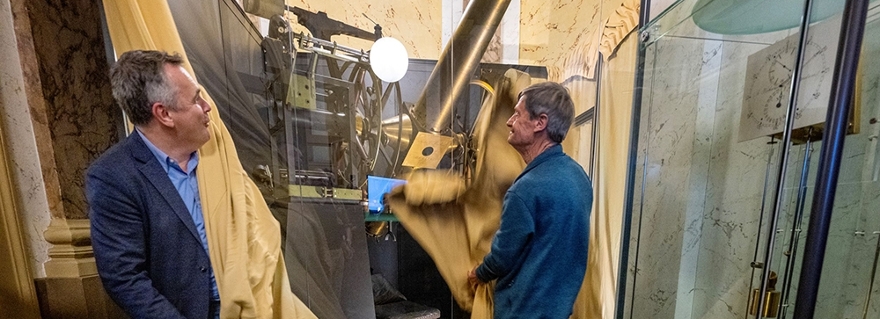
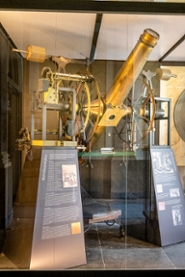
This meridian circle was designed to determine the positions of stars and played a vital role in national timekeeping for shipping and the railways. It also kept all the clocks in Leiden synchronised at the end of the 19th century. After modern technology rendered the telescope obsolete, it spent some time at Museum Boerhaave. In 2024, at the initiative of Werkgroep Leidse Sterrewacht, it was returned to the Old Observatory Leiden. It is now one of the highlights of the dozens of guided tours held there each year.
1861, 2.5 m long, Leiden Observatory. Purchase (2024) made possible by the Leiden Observatory Fund, a named LUF fund, and a donation from Ignas Snellen from his Dutch Research Council (NWO) Spinoza Prize.
Lunar lander
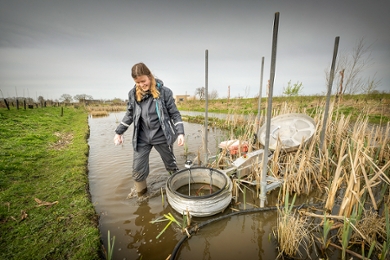
Nicknamed ‘lunar landers’, these DMR ECOFlux chambers continuously monitor carbon emissions at Polderlab. The research there focuses on innovative farming methods that enhance biodiversity, reduce emissions and improve water quality. In conventional farming on peat soils, lowering the water table causes large amounts of carbon dioxide to be released as the peat decomposes. The ECOFlux devices monitor whether alternative farming practices really do reduce emissions. Positioned among the rice and cranberry crops, and even in the ditch, these lunar landers generate a wealth of data every second. More than enough for PhD candidate Martijne Kannekens (pictured) and others to work towards more sustainable forms of agriculture.
2024, aluminium, 2 m long, Polderlab, Oud Ade. Purchase made possible by LUF donors and the Joskind Fund.
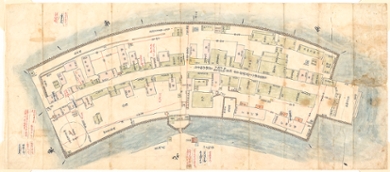
Trading post
This map of the island of Dejima is an important source for research into Japanese-Dutch history. Dejima was an artificial island off the coast of Nagasaki, roughly the size of Amsterdam’s Dam Square. As a Dutch trading post between 1641 and 1859, it was the only place where contact between Japan and the Western world was permitted. Houses, warehouses and wells can be seen on this hand-drawn map, a type of cadastral map used to maintain oversight of the Dutch island and its residents. For each building, the map records the owner and the amount of tax to be paid.
Approx. 1720, 87 x 38 cm, University Libraries Leiden. Purchase (2026) made possible thanks to an anonymous private donation to the LUF.
Want to learn more about supporting research and teaching through donations? Visit our donations website. You will also find more information about our LUF Key family.
In the header photo, Ignas Snellen and Vincent Icke unveil the Meridian Circle.
This article was published in the May 2026 edition of the Leidraad alumni magazine.